
Garage Overflowing With Mowers, Bikes, and Totes? How a Shed Reclaims the Space
August 27, 2026
Concrete Slabs: Maximum Stability for Permanent Structures
Frost and the Frost-Line Requirement
This is where concrete slabs require careful planning. A standard slab poured directly on grade is vulnerable to frost heave in cold climates unless it extends below the local frost line or is insulated with frost-protected shallow foundation techniques. A slab that heaves unevenly can crack and pull the shed out of square.
In regions with deep frost penetration, a floating slab design using thickened edges or an insulated perimeter is often used to manage this. In milder climates, a standard four-inch slab on compacted gravel base performs without issue.
When Concrete Makes Sense
A poured concrete slab is the most permanent foundation option. Once cured, it provides a flat, rigid surface that does not shift, settle, or degrade the way organic materials do. For large sheds, workshops, or any structure intended to be a long-term addition to the property, a concrete slab delivers a level of stability that other foundation types cannot match.
Concrete slabs are also the right choice when you plan to use the interior floor surface directly. If you want to park vehicles inside, run heavy equipment, or work on a smooth floor, concrete eliminates the need for any additional flooring system.
The Ground Beneath Your Shed Is Never Static
Quick Answer: A garage stays cluttered because it was never designed around what you actually store there — it just absorbs whatever gets carried in, one lawn tool and one holiday tote at a time, until the car ends up in the driveway. A custom-designed shed fixes that by giving each category of gear its own zone: wide-door access for the mower and snowblower, wall-mounted racks that get bikes off the floor, and dedicated shelving runs for totes sorted by season. The garage stops being a catch-all and goes back to being a garage.
You pull into the driveway, glance at the garage door, and don't even bother opening it. Between the mower, the kids' bikes stacked against each other, and the leaning tower of totes from three different holidays, there's no path to where the car would go — let alone room for the car itself. It didn't happen overnight. It happened one purchase and one "I'll deal with it later" at a time, until the garage quietly turned into the biggest, most disorganized storage unit on the property.
You're not the only one dealing with it. National surveys on garage clutter routinely find that roughly a third of homeowners can no longer fit a vehicle inside their own garage, and separate research out of UCLA found that three out of four families studied weren't parking in their garages at all. The space gets used the way a junk drawer gets used — for everything, in no particular order — because nothing about a standard attached garage was ever designed around lawn equipment, bikes, and seasonal storage in the first place.
Why the Garage Becomes the Default Dumping Ground
A garage is flexible by accident, not by design. It's a big, empty, weatherproof box attached to the house, so it absorbs whatever doesn't have a better home. The mower goes in because it needs to go somewhere. The bikes go in because the shed you don't have yet doesn't exist. The totes from last Christmas go in because the attic access is a pain and the basement is already full. None of it was planned. It just accumulated.
And once clutter starts, it multiplies. A mower blocking a clear path means bikes get shoved wherever there's a gap, which means totes get stacked wherever the bikes left room. Every new item makes the next one harder to place well, so it gets placed badly instead. A few seasons of that, and you're the homeowner squeezing sideways past the lawn tractor just to reach the freezer.
The real problem isn't the amount of stuff — it's the lack of zones. A garage with a mower, bikes, and totes all mixed together isn't actually more full than a shed holding the exact same items in an organized layout. It just feels that way, because nothing has a fixed spot. Give each category its own zone and the same gear takes up a fraction of the visual and physical chaos.
What Actually Fills a Twin Cities Garage
The specific mix matters, because Minnesota's seasons don't hand off cleanly. By the time you're done needing the mower and trimmer in October, the snowblower is already coming out of storage, and both machines end up living in the garage at once for a stretch every fall and spring. Add bikes that get used well into November on a mild year, holiday totes that come out in stages from October through January, and lake or camping gear that shows up every June, and you've got four or five categories of seasonal equipment all competing for the same floor space at the same time.
That overlap is exactly why a garage never fully catches up. There's rarely a clean window where only summer gear or only winter gear is present. Something is always mid-transition, which means the garage in Anoka or Coon Rapids is carrying a heavier, more varied load than a garage in a place with a shorter, milder off-season.
How a Custom Shed Actually Solves the Overflow
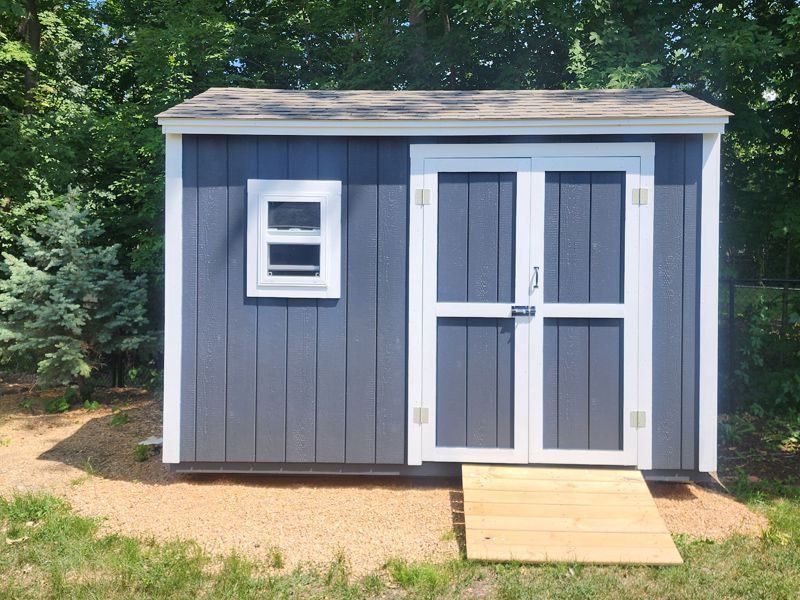
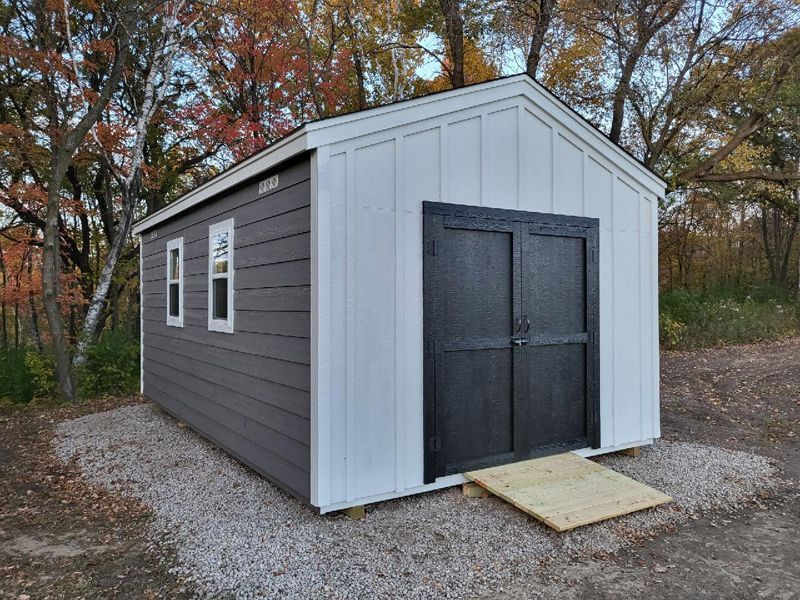
Buying a shed and moving everything into it isn't automatically a fix — a shed with no layout plan just becomes a second cluttered space instead of one. What actually solves the problem is designing the shed around the specific items competing for room in your garage, which is the difference between a generic storage box and a shed built with a real needs assessment up front.
Door width and placement matter more than most people expect
A mower or snowblower needs a door wide enough to roll straight through without a three-point turn, positioned on the side of the shed that lines up with how you actually approach it from the yard. Get that wrong and you've built a shed you have to fight with every single time.
Vertical storage takes bikes off the floor entirely
Wall-mounted hooks or a simple rack hung at the right height clears a huge amount of floor space that bikes would otherwise eat up leaning against each other. It also means bikes stop tipping into everything else every time someone grabs the one in front.
Zoned shelving keeps totes from turning into a leaning tower
Instead of one stack that has to be fully unstacked to reach the bottom bin, a shelf run built at the design stage lets you sort totes by category — holiday, off-season clothing, camping — with every bin reachable on its own shelf.
None of that happens by accident. It happens because the shed gets designed around what you're storing before a single board gets cut, with the layout, door placement, and add-ons like shelving or a loft planned in from the first conversation instead of squeezed in after the fact.
Tip: Before you sit down to design the shed, measure your bulkiest wheeled items — mower deck width, snowblower length, handlebar width on the widest bike. Those numbers should drive your door size and placement decisions, not the other way around. A shed built to a standard door width and then loaded with oversized equipment is how you end up scraping paint off the mower deck every time you pull it out.
Built to Handle What the Attached Garage Couldn't
A shed isn't just extra square footage. Built right for a Minnesota yard, it handles the parts of storage an attached garage was never great at. Roof pitch matters here — a shed roof designed for heavy regional snow loads sheds weight instead of sagging under it, and proper ventilation keeps humid summer air from turning into condensation on the ceiling above your bikes and totes. Weather-resistant siding and a moisture barrier mean the structure itself isn't fighting the freeze-thaw cycle the way a shed thrown together with basic materials would.
That durability also changes what's smart to store where. Gas-powered equipment, in particular, is worth thinking about differently once you've got a dedicated outbuilding.
Warning: An attached garage that shares a wall with the house is not an ideal place to store gas cans, fertilizer, or other combustibles, especially near a water heater or furnace with a pilot light. It's a common setup, but it puts fuel vapors closer to an ignition source and closer to your living space than they need to be. A detached shed keeps that equipment and those fuels farther from the house, which is one more reason moving the mower and trimmer out of the garage is worth doing beyond just clearing floor space.
Getting the Garage — and the Driveway — Back
Once the mower, bikes, and totes have real homes in a shed built for them, the change in the garage is immediate. The car goes back inside, which matters more in a Minnesota winter than almost anywhere else — no more scraping a windshield in the driveway or de-icing a lock in single-digit temperatures. The floor is clear enough to actually walk across without stepping over a rake handle or a stray bike pedal. And if there's a fire or another emergency, a clear path to the door isn't a small thing.
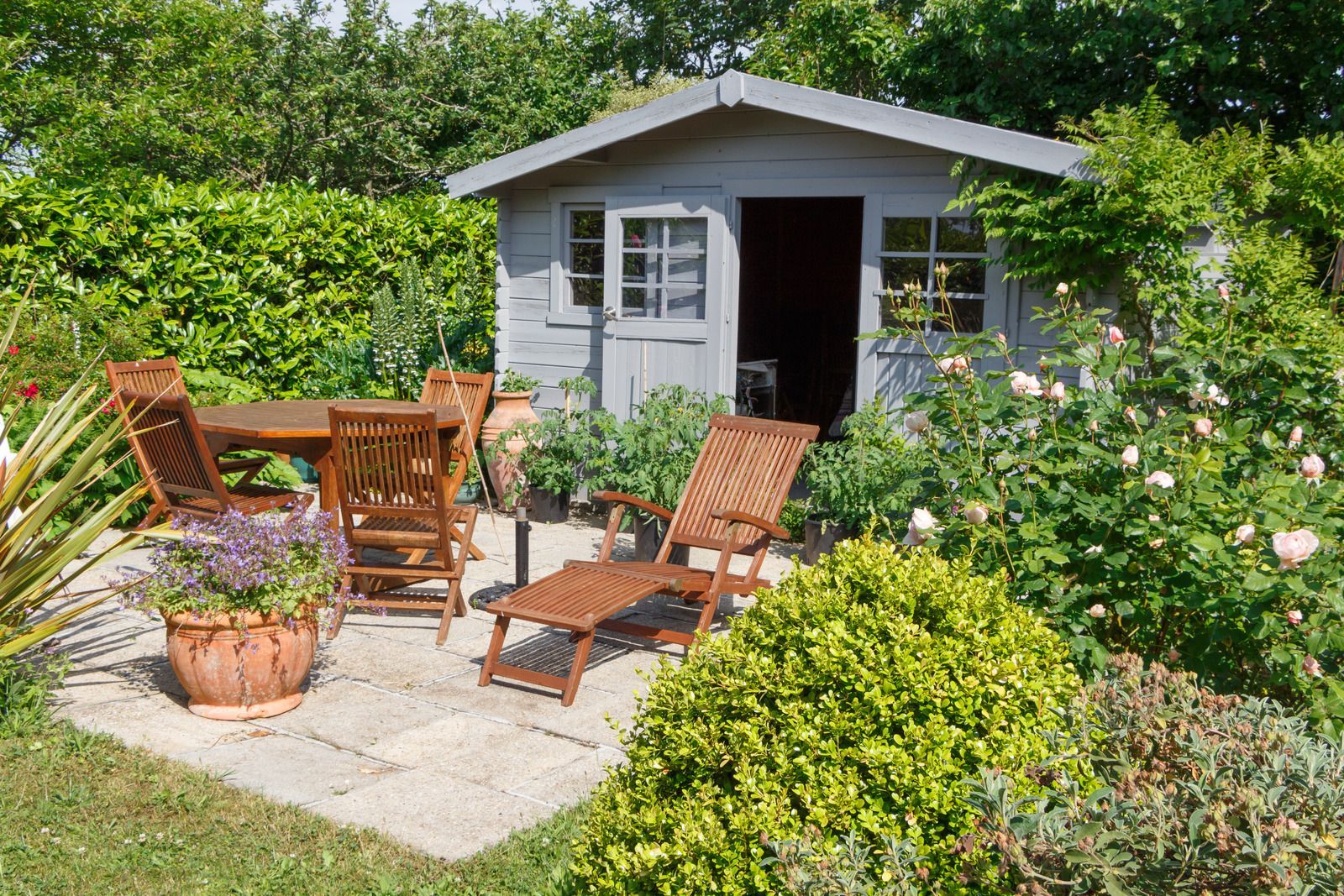
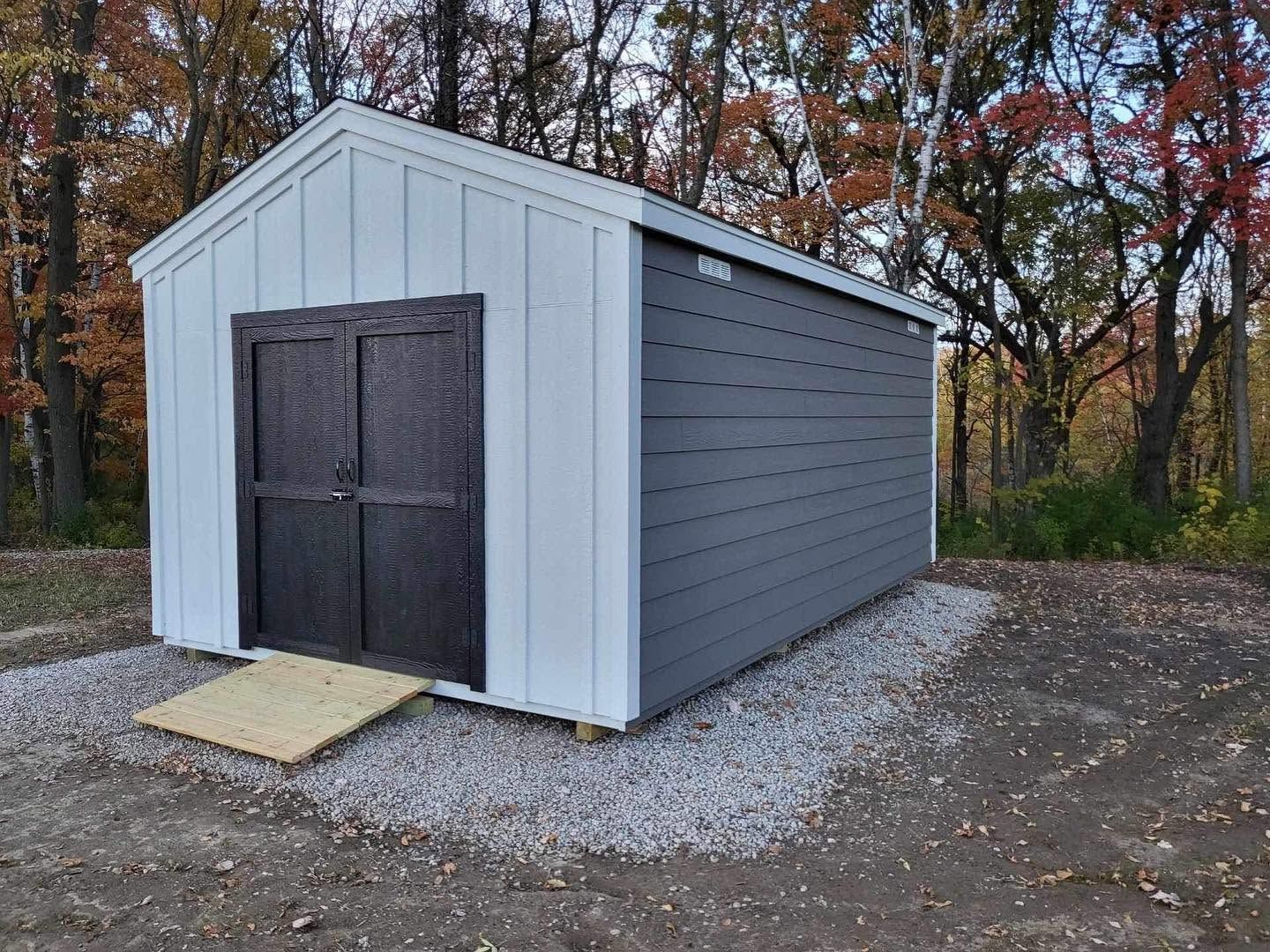
There's a curb appeal side to this too. A shed designed to match your home's siding, trim, and roofline reads as an intentional feature of the property instead of a mismatched box dropped in the corner of the yard. Buyers and appraisers both tend to notice the difference between a yard with a coordinated shed and one with a garage bursting at the seams.
Frequently Asked Questions
What's the most common mistake homeowners make when moving garage items into a shed?
Treating the shed like another junk drawer. Without planned zones for lawn equipment, bikes, totes, and tools, clutter quickly returns. Organize dedicated storage areas before moving anything into the shed.
How big of a shed do I actually need to store a mower, bikes, and seasonal totes?
A well-planned 10x12 or 10x16 shed can handle mowers, several bikes, and seasonal totes. Wall racks, vertical storage, and shelving maximize available space without requiring a much larger footprint.
Can a shed safely store gas-powered equipment like a chainsaw or leaf blower?
Yes, a properly ventilated shed can safely store gas-powered equipment. Keep fuel containers sealed, upright, and away from heat sources while maintaining adequate airflow to prevent potentially dangerous vapor buildup indoors.
Will a shed actually reduce clutter, or just move it somewhere else?
A properly designed shed reduces clutter by giving every item a dedicated place. Without shelving, racks, and organized zones, however, it can quickly become another overcrowded storage space filled with clutter.
Should I add a loft to the shed for extra storage?
A loft works well for lightweight, seasonal items like holiday totes and camping gear. Keep heavy or frequently used equipment at floor level for safer, easier access whenever you need it.
What's the difference between a pre-made kit and a custom-designed shed for this kind of storage problem?
Pre-made sheds offer standard sizes, doors, and layouts, while custom sheds accommodate your specific equipment. Door widths, shelving, racks, and storage zones are designed around what you actually own today.
Reclaim Your Garage With Purpose-Built Shed Storage
A crowded garage becomes far easier to manage when mowers, bikes, snowblowers, and seasonal totes have dedicated places outside the home. Redi Bilt brings 40 years of experience designing sheds for homeowners in Anoka, MN, with layouts shaped around the equipment they actually own. Thoughtful door placement, accessible shelving, bike racks, and usable floor space keep everyday gear organized while allowing the garage to return to its original purpose without simply shifting clutter elsewhere on the property.
The right shed also makes seasonal transitions feel less disruptive throughout the year. Summer equipment can stay accessible while winter tools come into rotation, and holiday or camping totes remain organized without blocking frequently used items. With storage zones planned around real routines, homeowners spend less time moving things around just to reach what they need. The result is a cleaner garage, a more functional shed, and a property that feels organized through every Minnesota season, even when storage needs overlap.