
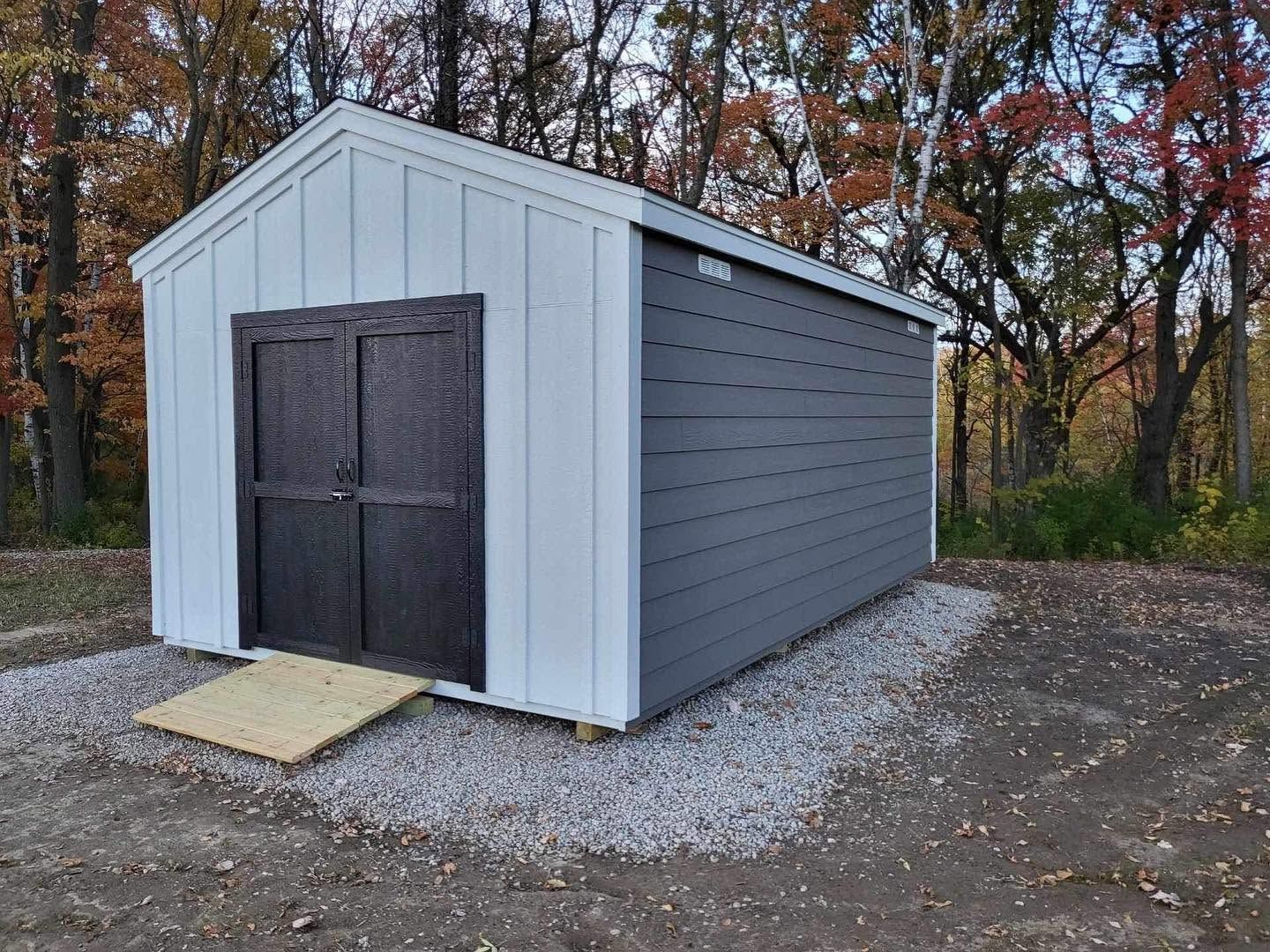
Gravel Pad, Concrete Slab, or Deck Blocks: Choosing the Right Shed Foundation for Your Project
June 18, 2026

A shed is only as solid as what sits beneath it. Most people spend time choosing the right size, style, or roof pitch, but the foundation decision often gets pushed to the last minute. That is a mistake. The foundation you choose determines how long your shed lasts, how level it stays over the years, and how well it holds up against frost, drainage issues, and ground movement. Getting this wrong means warped floors, stuck doors, and structural problems that compound over time.
Gravel pads, concrete slabs, and deck blocks are the three most common foundation options for residential sheds. Each one suits different conditions, different shed sizes, and different goals. What works well on a flat, well-drained lot in a mild climate may fail quickly on a frost-prone site with poor drainage. Understanding the real differences between these options, including where each one performs and where each one falls short, gives you a foundation decision you can stand behind for decades.
Why Foundation Choice Matters More Than Most People Realize
The Ground Beneath Your Shed Is Never Static
Soil moves. It swells when it absorbs moisture, contracts when it dries out, and heaves when it freezes. A shed foundation that ignores these forces will shift, rack, and settle unevenly over time. Uneven settling is the root cause of most shed problems that homeowners attribute to poor construction. Doors that bind, floors that bounce, and walls that pull away from the roof are almost always traced back to a foundation that was not suited to the site conditions.
The relationship between frost depth and foundation design is especially important in colder regions. In areas where ground frost penetrates deep into the soil, any foundation that sits above the frost line is vulnerable to seasonal movement. This is not a flaw in the foundation material itself. It is a site-specific factor that must be accounted for before you choose your approach.
Drainage, Load, and Local Code
Beyond frost, drainage is the other major variable. Water that pools beneath or around a shed accelerates rot in wood framing, promotes mold, and undermines any foundation that is not designed for wet conditions. Local building codes in many jurisdictions specify minimum foundation requirements for structures above a certain square footage. Checking those requirements before you build protects you from having to tear out work later.
Gravel Pads: Flexible, Drainage-Friendly, and Widely Used
How a Gravel Pad Works
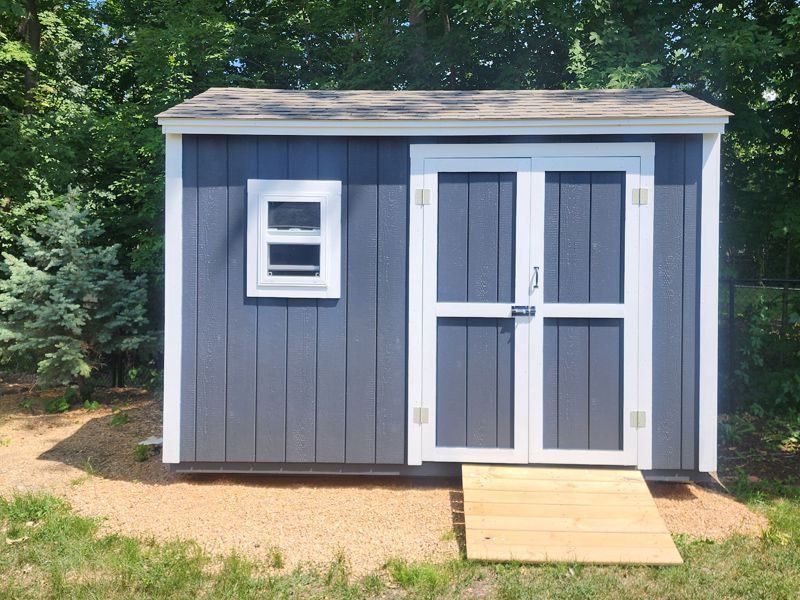
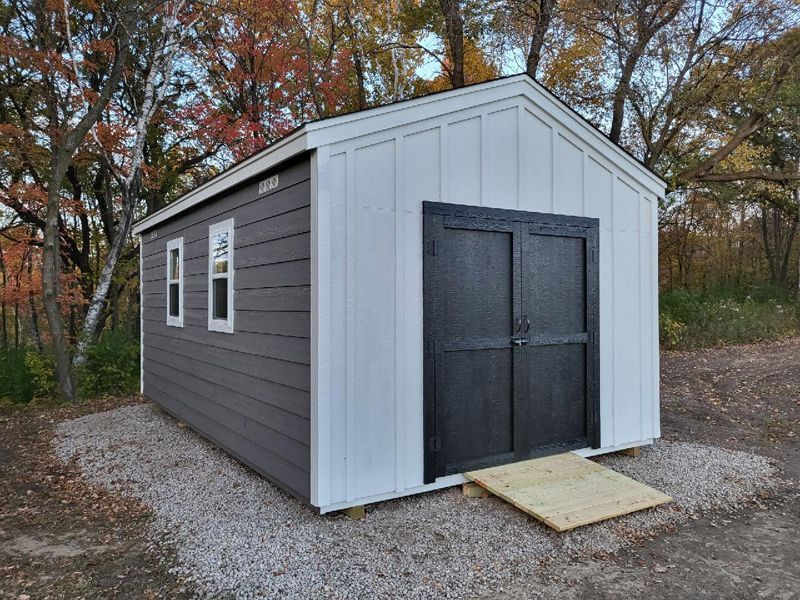
A gravel pad foundation involves excavating a shallow area, installing landscape fabric or a weed barrier, and filling the space with compacted crushed stone. The pad typically extends six inches beyond each wall of the shed and sits at or slightly above grade to encourage water to run away from the structure.
Crushed stone, often called gravel or road base, locks together under compaction in a way that rounded river rock does not. This is an important distinction. Crushed angular stone creates a stable, load-bearing surface. Rounded gravel shifts under pressure and should not be used as a primary shed foundation material.
Where Gravel Pads Perform Well
Gravel is the strongest choice for drainage. Water moves through it freely rather than pooling beneath the shed. For sites with moderate drainage challenges or in regions with significant rainfall, this matters. Gravel also allows for air circulation beneath the shed floor, which reduces moisture accumulation in the wood framing.
Gravel pads work well for sheds of most sizes, including larger 12x16 or 12x20 structures, provided the base is properly compacted and the depth is sufficient. On sloped sites, a gravel pad can be built up on one side to create a level surface without major excavation.
Limitations to Consider
Gravel pads require proper edging, typically pressure-treated timber, concrete blocks, or steel edging, to prevent the stone from migrating outward over time. Without containment, the pad slowly loses its shape. Gravel is also not ideal for very large sheds or structures that will carry extremely heavy loads, such as vehicle storage, where a concrete slab provides more uniform support.
Concrete Slabs: Maximum Stability for Permanent Structures
When Concrete Makes Sense
A poured concrete slab is the most permanent foundation option. Once cured, it provides a flat, rigid surface that does not shift, settle, or degrade the way organic materials do. For large sheds, workshops, or any structure intended to be a long-term addition to the property, a concrete slab delivers a level of stability that other foundation types cannot match.
Concrete slabs are also the right choice when you plan to use the interior floor surface directly. If you want to park vehicles inside, run heavy equipment, or work on a smooth floor, concrete eliminates the need for any additional flooring system.
Frost and the Frost-Line Requirement
This is where concrete slabs require careful planning. A standard slab poured directly on grade is vulnerable to frost heave in cold climates unless it extends below the local frost line or is insulated with frost-protected shallow foundation techniques. A slab that heaves unevenly can crack and pull the shed out of square.
In regions with deep frost penetration, a floating slab design using thickened edges or an insulated perimeter is often used to manage this. In milder climates, a standard four-inch slab on compacted gravel base performs without issue.
Concrete Comparison at a Glance
| Factor | Gravel Pad | Concrete Slab | Deck Blocks |
|---|---|---|---|
| Drainage | Excellent | Poor without slope | Good |
| Permanence | Moderate | High | Low to Moderate |
| Frost Resistance | Moderate | Requires planning | Good if freestanding |
| Best For | Most shed sizes | Workshops, large sheds | Small to mid sheds |
| Reversibility | Easy | Difficult | Easy |
Deck Blocks: A Practical Option for Smaller Sheds
What Deck Blocks Are and How They Work
Where Deck Blocks Work and Where They Do Not
Deck blocks are best suited to smaller sheds, generally up to 10x12 or so, on relatively flat ground. They are easy to set, require no curing time, and the project can move forward the same day. For a garden shed, tool storage structure, or seasonal building, deck blocks are a sound and widely accepted approach.
On sloped ground, deck blocks become harder to manage. Stacking blocks to reach level on the downhill side increases the risk of tipping or settling. For sheds larger than 10x14, the span between blocks can become long enough that floor framing requires heavier lumber to prevent bounce and flex.
Best Practices for Deck Block Installation
Place deck blocks on firm, undisturbed or well-compacted soil. Avoid setting them on soft or recently disturbed ground. Position blocks at all corners and at regular intervals along the perimeter, with at least one center block under any beam spanning more than eight feet. Check for level across all blocks before setting the floor frame.
FAQs
Can I use deck blocks for a 12x16 shed?
Deck blocks can support a 12x16 shed if the floor frame is engineered for the span and blocks are spaced at appropriate intervals. On flat, well-compacted ground, this is a manageable approach, though a gravel pad is often more stable at that footprint.
Do I need a permit for a shed foundation?
Permit requirements vary by municipality and are usually triggered by the shed's square footage. Many jurisdictions require permits for structures larger than 120 or 200 square feet. Check with your local building department before starting any foundation work.
How thick should a gravel pad be for a shed?
A minimum of four inches of compacted crushed stone is the standard recommendation for most residential sheds. Larger structures or sites with poor drainage benefit from six inches or more. The stone should be contained within pressure-treated timber or concrete block edging.
Will a concrete slab crack under a shed?
A properly poured slab with adequate base preparation and reinforcement resists cracking under normal shed loads. Cracking is most often caused by frost heave on slabs that were not designed for cold climates, or by inadequate base compaction before the pour.
Which foundation is easiest to remove if I sell the house?
Deck blocks and gravel pads are the most reversible options. Both can be removed without major excavation or demolition. A concrete slab is a permanent addition to the property and typically stays in place, which may be a factor depending on local real estate norms or zoning considerations.
Seasoned Professionals Who Get Shed Foundations Right Every Time
Choosing a shed foundation is not a secondary detail. It is a structural decision that affects how your shed performs for the life of the building. Gravel pads offer strong drainage and broad versatility across most shed sizes. Concrete slabs provide the stability and surface quality that large or permanent structures need. Deck blocks offer a practical, low-preparation solution for smaller sheds on flat ground. Site conditions, climate, shed size, and long-term plans all factor into which approach makes the most sense for a given project. Taking the time to match the foundation to the situation produces a shed that stays level, drains well, and holds up through seasonal changes year after year.
At Redi Bilt, we have spent 40
years
building backyard storage sheds for homeowners across Anoka, Minnesota, and the surrounding region. We understand what Minnesota winters, spring thaws, and variable soil conditions do to shed foundations over time, and we build accordingly. Every project we take on starts with an honest assessment of the site, the intended use, and the right foundation approach for those specific conditions. We do not apply a one-size solution to every project. We bring four decades of hands-on experience to each build, and that experience shows in sheds that stay square, level, and functional for the long run. If you are planning a shed project in the Anoka area, we are ready to help you build it right from the ground up.